Alex Eala’s Game is Being Compared to Nadal and Sinner — Here’s Why
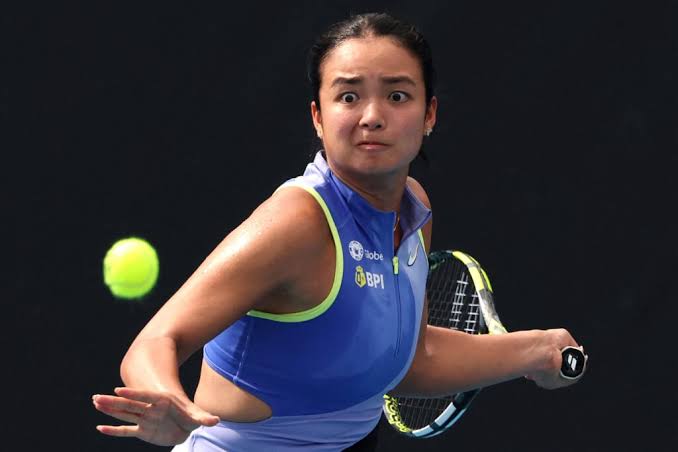
Alex Eala has become one of the biggest stories of the 2026 US Open, and former British No. 1 Greg Rusedski believes there are distinctive qualities in her game that recall two Grand Slam champions: Rafael Nadal and Jannik Sinner.
The comparison is not that Eala plays exactly like either player. Rusedski's point is about specific details in her intensity, movement, court positioning and ability to take the ball early. Those qualities help explain why Eala has become such a difficult opponent and why her return of serve has attracted so much attention.
Why Is Alex Eala Being Compared to Nadal and Sinner?
Rusedski's comments focused on the way Eala carries herself and moves around the baseline. He linked her competitive intensity to Nadal, while her low body position and knee bend reminded him of Sinner.
He described Eala as having a combination of Nadal-like intensity and Sinner-like positioning, while praising the mindset she brings to the court.
That distinction matters. Eala is not being presented as a replica of either champion. Instead, the comparison identifies individual pieces of elite-level tennis that are already visible in her game.
The Nadal Comparison: Intensity and Presence
Nadal's career was built around extraordinary intensity, physical commitment and relentless pressure from the baseline. Rusedski sees a similar competitive presence in Eala.
Eala's recent US Open performances provide context for that assessment. She has shown a willingness to stay aggressive, recover from difficult moments and continue looking for opportunities to take control of rallies rather than simply wait for errors.
That mentality has become an important part of Eala's rise. Her ability to combine physical movement with an aggressive mindset is one reason her matches have attracted increasing attention beyond the Philippines.
The Sinner Comparison: Staying Low and Taking Time Away
The Sinner comparison is more technical. Rusedski specifically pointed to Eala's body position and the way she bends her knees while moving from the back of the court.
Staying low helps a player maintain balance and prepare quickly for the next shot. For Eala, that positioning also fits with one of the biggest weapons in her game: taking the ball early.
When a player strikes the ball early, an opponent has less time to recover and prepare for the next shot. That can turn a neutral rally into an attacking position without requiring a huge swing or a spectacular winner.
Rafael Nadal
The comparison centers on intensity, physical commitment and the relentless presence Eala brings to the court.
Jannik Sinner
The comparison focuses on low body positioning, knee bend and movement while operating from the baseline.
Why Eala’s Return of Serve Is the Biggest Talking Point
The most striking part of Rusedski's assessment is actually the praise for Eala's return.
He highlighted her ability to read serves and patterns, stay close to the baseline and take the ball early. That allows Eala to turn an opponent's serve into an attacking opportunity instead of simply trying to neutralize the point.
That is especially important at Grand Slam level. Powerful servers can create free points, but a strong returner can take away that advantage by getting the ball back early and forcing the server into the next phase of the rally immediately.
What Eala Still Needs to Improve
The comparisons also come with an important qualification: Eala still has areas of her game to develop.
Her serve remains one of the clearest areas where another step forward could make a major difference. If she can consistently generate more pressure with her first shot on serve, her elite return game gives her a strong platform for controlling more matches.
That is what makes the current stage of her career so interesting. The qualities that are already attracting comparisons with established champions are present, but they are still being developed within a much younger career.
Why the Comparison Matters at the 2026 US Open
Eala is no longer simply an intriguing young prospect. She entered the 2026 US Open as the No. 17 seed after a breakthrough season that included her first WTA singles title in Washington and a run to the fourth round at Wimbledon.
At the US Open, she reached the third round after beating Mary Stoiana and Oleksandra Oliynykova. Her run has turned her into one of the tournament's most closely followed young players.
The bigger story is that Eala's game is now generating technical analysis from former top players. The conversation is moving beyond Who is Alex Eala? toward a much more interesting question: How far can this version of Alex Eala go?
Alex Eala Is Not Nadal or Sinner — And That Is the Point
The most useful way to understand Rusedski's comparison is not to place Eala in the shadow of Nadal or Sinner. It is to recognize that her game combines traits that are difficult to develop at the highest level: intensity, early ball striking, aggressive returning, movement and confidence.
Eala still has work to do, particularly with her serve and the challenge of sustaining this level deep into major tournaments. But the ingredients are increasingly visible.
She does not need to become another Nadal or another Sinner. If she continues developing the weapons that are already making her stand out, she can become something entirely her own.