What Is a Flock Camera? The Complete Guide to ALPR Surveillance & Privacy
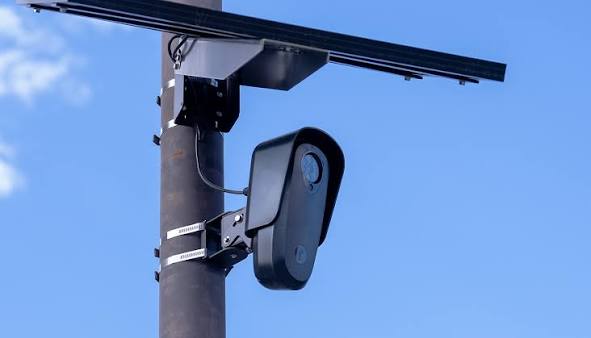
Over the past few years, sleek black pole-mounted cameras have rapidly proliferated across suburban neighborhoods, commercial corridors, and city intersections. Manufactured primarily by Flock Safety, these Automated License Plate Reader (ALPR) systems have transformed municipal security. While law enforcement agencies praise them for slashing property crime rates and tracking stolen vehicles in real time, privacy advocates raise serious concerns about mass surveillance, data hoarding, and constitutional rights.
What it is: An Automated License Plate Reader (ALPR) system capturing vehicle plates, make, model, and color.
Purpose: Used by law enforcement and HOAs for neighborhood security and criminal tracking.
Main Controversy: Civil liberties debates, tracking database lookups, and Fourth Amendment concerns.
How Do Flock Cameras Work? (Technology & Features)
ALPR Technology & Vehicle Capture
Unlike standard security cameras that record continuous video feeds, Flock cameras utilize advanced Optical Character Recognition (OCR) combined with machine learning algorithms. Every time a vehicle passes, the system captures high-resolution still photographs. It extracts alpha-numeric license plate data alongside specific vehicle attributes—such as exact color, make, model, roof racks, bumper stickers, and body type—allowing investigators to query partial descriptions even if a plate is obscured or missing.
Data Retention & Live Feed Search
Law enforcement agencies rely heavily on the flock camera database search capability to investigate crimes. Rather than relying on a continuous flock camera live feed, investigators query historical image logs stored in cloud servers. Police departments can set automated "hot-list" alerts that ping local officers instantly whenever a vehicle associated with a stolen car, missing person, or felony warrant passes within range of any camera in the network.
Flock Camera Maps & Location Lookups: Finding ALPRs Near You
How Public Tracking Maps (Deflock) Work
Due to the secretive expansion of private and municipal surveillance networks, citizens often wonder about flock cameras near me. This curiosity has spurred open-source crowdsourcing initiatives. Platforms like OpenStreetMap and community-driven mapping projects such as the **deflock map** allow everyday users to log and verify physical camera hardware locations, giving communities transparency regarding where their daily commutes are being tracked on any active flock camera map.
"Have I Been Flocked?" & License Plate Lookup Myths
A common misconception is that private citizens can run a personal **have i been flocked** lookup to search centralized databases or check if their specific vehicle plates have been scanned. In reality, public-facing portals for individual history checks do not exist. Access to the proprietary database is strictly restricted to subscribed law enforcement personnel and authorized private entities like Homeowners Associations (HOAs) managing specific neighborhood property gates.
The Privacy Debate: Are Flock Cameras Unconstitutional?
Fourth Amendment & Mass Surveillance Concerns
The core legal argument fueling the **flock camera controversy** centers around whether widespread, warrant-less tracking violates the fourth amendment. Critics argue that passively cataloging the movements of law-abiding citizens 24/7 creates a digital trail of private habits, associations, and routines. While courts have traditionally permitted police to observe vehicles on public roads, civil liberties groups argue that automated, aggregated mass data collection crosses the line into unconstitutional dragnet surveillance.
Policy Violations & Local Controversies
As city councils debate rolling out contracts, numerous municipalities have experienced severe pushback. Incidents involving data-sharing breaches, unauthorized personal lookups by rogue officers, and a lack of clear retention policies have led several local governments to suspend or completely ban ALPR deployments until stricter oversight regulations are enacted.
Industry Alternatives: Axon ALPR vs. Flock Safety
Comparison Breakdown
While Flock Safety dominates the fixed-pole neighborhood market, law enforcement agencies frequently evaluate alternatives like the **axon cameras** ecosystem. Understanding the distinction between these solutions helps clarify how different jurisdictions approach automated tracking:
- Flock Safety: Focuses on solar-powered and cellular fixed-pole cameras placed at strategic neighborhood entrances, intersections, and commercial perimeters to build a passive regional capture grid.
- Axon ALPR: Integrates directly into mobile law enforcement workflows via in-car dashcams and body-worn hardware, allowing patrol officers to scan plates dynamically while driving rather than relying strictly on fixed infrastructure.
Frequently Asked Questions (FAQ)
Can you get a speeding ticket directly from a Flock camera?
No. Flock cameras are engineered strictly for license plate recognition and vehicle attribute identification; they are not certified speed or red-light cameras and cannot issue traffic citations.
Do Flock cameras record video or just photographs?
Flock cameras capture rapid-fire still photographs and short evidence-grade image bursts rather than continuous high-definition video streams, minimizing unnecessary bandwidth and storage use.
How long is Flock camera data stored?
By default, captured vehicle data is typically stored securely in the cloud for 30 days before being automatically purged, though individual law enforcement agencies can adjust retention schedules based on local policies.